
Did you know that the physical design and decor of your practice can influence up to 35% of a patient's overall satisfaction? In an era where clinical excellence is the baseline, the environment you cultivate becomes your most powerful differentiator. Many physicians struggle with high patient churn because "cold" institutional layouts fail to reflect their professional brand or justify premium concierge fees. Prioritizing medical office design for patient satisfaction isn't just about aesthetics; it's a strategic clinical intervention that defines your practice's trajectory.
You've likely felt the frustration of an inefficient layout that causes staff burnout or compromises patient privacy. We believe your space should be an extension of your elite care, not a barrier to it. This guide explores how evidence-based design and boutique aesthetics transform clinical environments into high-retention experiences. You'll discover the 2026 FGI Facility Code updates, the ROI of biophilic elements, and how modern infrastructure, pioneered by visionary developers like Dr. Femi Ashadele, empowers physician entrepreneurs to lead the Metro Atlanta market with prestige and operational control.
Key Takeaways
- Learn how hospitality-inspired aesthetics transition your lobby from a sterile waiting area into a curated space that builds immediate clinical trust.
- Implement evidence-based medical office design for patient satisfaction by integrating natural light and biophilic elements that measurably improve healing outcomes.
- Master the "no-wait" experience by strategically separating patient paths from clinical zones to protect acoustic privacy and reduce staff burnout.
- Discover why build-to-suit planning provides independent physicians with the operational control and technology infrastructure needed to justify concierge fees.
- Explore how the boutique, Class-A environment at Northlake Concierge Medical Center serves as a premier destination for specialized practices in Tucker.
Why Medical Office Design is the New Frontier for Patient Satisfaction
The traditional medical office often feels like a relic of a purely utilitarian era. Fluorescent lighting, beige linoleum, and rows of plastic chairs were once the standard for efficiency. Today, that aesthetic is a liability. In the competitive Atlanta market, physicians are realizing that medical office design for patient satisfaction is no longer an optional luxury. It's a strategic necessity. A patient's journey begins long before they meet their doctor; it starts the moment they cross the threshold of the building.
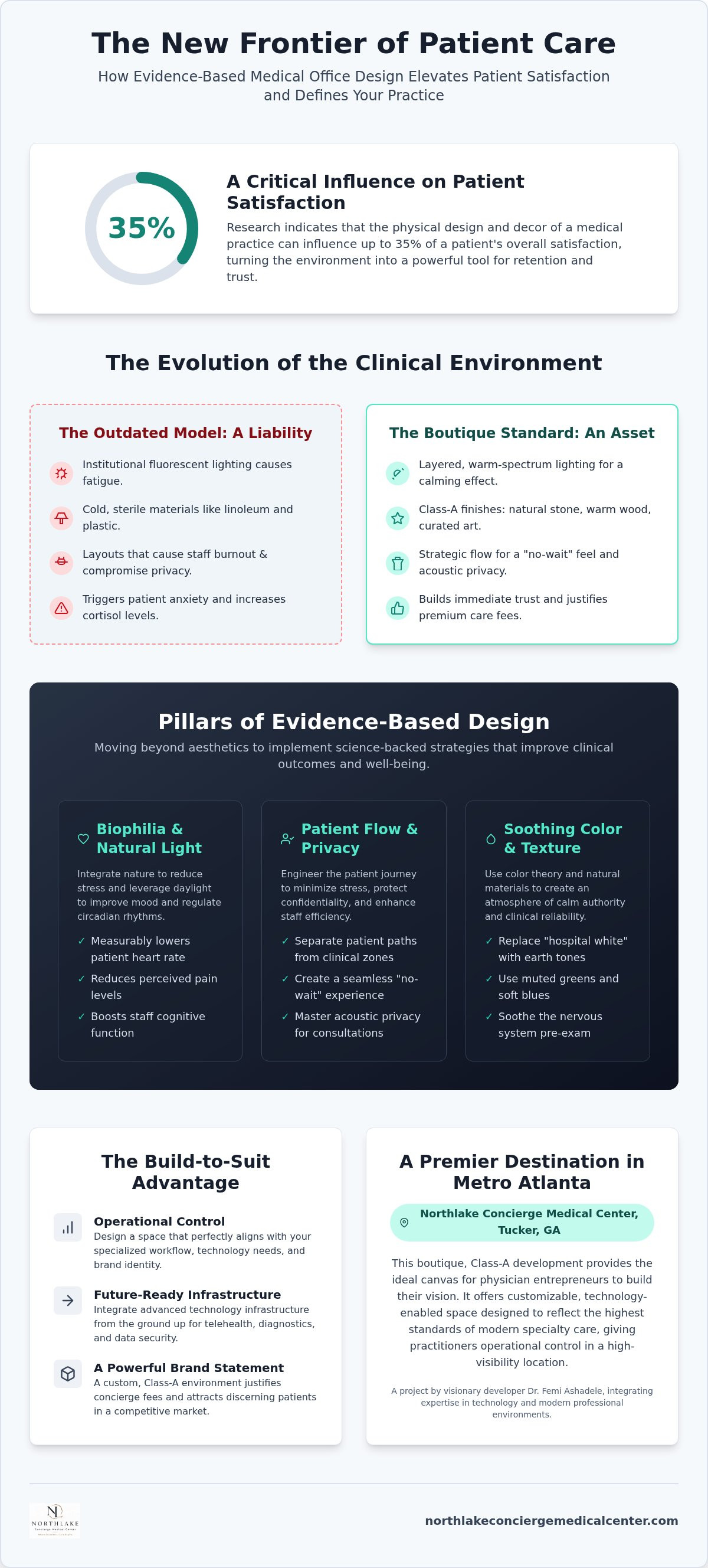
Research indicates that the environment influences nearly 24% to 35% of a patient's overall satisfaction. When a space feels "clinically cold," it triggers a physiological response. Anxiety spikes. Cortisol levels rise. This stress can negatively impact a patient's perception of care and their willingness to adhere to treatment plans. By applying Evidence-Based Design principles, practitioners can mitigate these stressors. Sophisticated design transforms the clinical encounter from a source of dread into a moment of professional reassurance.
First Impressions: The Boutique Lobby Experience
First impressions are indelible. The era of the plexiglass check-in window is ending. Modern concierge practices favor an open, hospitality-driven arrival that feels like a high-end hotel rather than a hospital campus. Class-A aesthetics, such as natural stone, warm wood accents, and curated art, establish immediate authority. Lighting plays a critical role here. Moving away from institutional overheads to layered, warm-spectrum lighting softens the environment. It signals that the patient is a guest, not a number in a queue. These details foster a sense of peace that carries through the entire visit.
Design as a Reflection of Your Professional Brand
Your physical space is the most visible manifestation of your professional brand. For independent specialty practices, the environment must justify the prestige and potential concierge fees associated with elite care. A thoughtfully designed office suggests precision, intentionality, and a high level of detail. These cues translate directly into patient retention. At developments like Northlake Concierge Medical Center in Tucker, the focus is on providing a boutique Class-A environment that reflects the visionary standards of its founder, Dr. Femi Ashadele. When your office looks like the future of medicine, patients trust that your care is equally advanced. You can view the renderings of this boutique vision to see how medical office design for patient satisfaction is being redefined for the Metro Atlanta market.
Evidence-Based Design: Science-Backed Elements that Drive Outcomes
Evidence-Based Design (EBD) is the rigorous process of basing decisions about the built environment on credible research to achieve the best possible outcomes. While once reserved for large-scale hospital campuses, EBD is now the standard for high-performance boutique practices. Implementing medical office design for patient satisfaction means moving beyond aesthetic intuition. It requires an objective understanding of how physical variables like light, sound, and color influence human biology and emotional states.
Natural light is perhaps the most potent tool in the EBD toolkit. Studies consistently show that exposure to daylight regulates circadian rhythms, reduces perceived pain, and improves the mood of both patients and providers. For staff, it boosts cognitive function and reduces the fatigue associated with high-stakes clinical work. Biophilic design is the intentional integration of nature into the built environment to reduce stress. By incorporating living walls or views of greenery, physicians can measurably lower patient heart rates and blood pressure before an exam even begins.
Color theory further refines this atmosphere. Sophisticated palettes move away from "hospital white" toward muted earth tones, sage greens, and soft blues. These selections soothe the nervous system without feeling dated or overly domestic. They maintain the clinical reliability expected of an elite practice while softening the patient's emotional response to the space. When these elements align, the environment itself becomes a partner in the healing process.
Biophilia and Natural Light in Clinical Suites
Strategic window placement is essential for balancing patient comfort with energy efficiency. In a boutique setting, large windows can be treated with smart tinting to provide privacy without sacrificing the healing benefits of the sun. Indoor greenery serves a dual purpose; it acts as a natural air filtration system while providing a visual "rest point" for anxious patients. These elements create a sense of vitality and peace that institutional spaces simply cannot replicate.
The Acoustic Environment: Privacy as a Design Priority
Privacy is a pillar of patient dignity and a legal necessity. High noise levels are a primary driver of low satisfaction scores and can inadvertently lead to HIPAA violations if conversations carry between exam rooms. Modern acoustic design utilizes sound-masking technology and specialized insulation to ensure complete confidentiality. Strategic layouts separate high-activity administrative zones from quiet clinical corridors. If you are ready to elevate your environment, you can consult with our build-to-suit team to integrate these science-backed features into your custom suite.
Optimizing Patient Flow and Acoustic Privacy for Concierge Care
In concierge medicine, time is the ultimate currency. If a patient spends fifteen minutes in a crowded room, the boutique value proposition evaporates. Effective medical office design for patient satisfaction prioritizes a "no-wait" flow that respects the patient's schedule and preserves their dignity. This approach requires a fundamental rethinking of how people move through a clinical space, shifting from a model of mass processing to one of individual attention.
Separating "on-stage" patient paths from "off-stage" clinical areas is a hallmark of elite practice design. Borrowed from high-end hospitality, this dual-pathway model ensures that patients only see the curated, serene aspects of the facility. They shouldn't encounter administrative clutter, hear staff lunchroom chatter, or see clinical waste. Wide corridors and modern exterior design aren't just about aesthetics; they're essential for a sense of luxury. Narrow hallways feel institutional and cramped, while generous circulation space allows for a calm, unhurried pace that reduces anxiety.
Exam room layouts are also evolving to support better communication. We've moved past the era of the physician staring at a screen while the patient sits on a paper-covered table. Modern suites feature consultation zones that facilitate eye contact and shared decision-making. These layouts allow the physician and patient to review digital health data side-by-side, fostering a partnership rather than a hierarchy. This physical alignment strengthens the doctor-patient bond, which is the core of any successful concierge model.
Eliminating the Institutional Waiting Room
We are replacing the traditional waiting room with consultation lounges that feel more like a private club than a clinic. By reducing friction points during the check-in process, we ensure a seamless transition from the entrance to the exam suite. Dr. Femi Ashadele, the developer of Northlake Concierge Medical Center, leverages his background in technology and cybersecurity to ensure these digital-first workflows are both efficient and secure. A refined layout prevents patients from being "paraded" through high-traffic clinical halls, maintaining a sense of exclusivity from arrival to departure.
HIPAA-Compliant Design and Patient Dignity
Privacy is more than a regulatory requirement; it's a pillar of patient trust. Medical office design for patient satisfaction must balance open, airy aesthetics with the need for secure clinical spaces. This includes sound-dampened walls and private consultation rooms where sensitive discussions remain confidential. In specialty clinics, visual privacy is equally vital. Strategic sightlines ensure that patients aren't visible to others in high-traffic areas. This attention to detail protects the patient's dignity and reinforces the prestige of the practice brand.
Build-to-Suit Strategies: Customizing for Specialized Practice Needs
For the physician entrepreneur, a standard hospital campus lease often feels like a compromise. These pre-built suites are designed for the average tenant, not the elite specialist. Build-to-suit strategies offer a distinct advantage by allowing you to dictate the workflow, aesthetic, and technology of your practice from the very beginning. This level of operational control is vital for those moving into the concierge space. Strategic site selection in Tucker, Georgia, places your practice minutes from the I-85 and I-285 interchange. This location maximizes your outpatient reach across the Northlake and Metro Atlanta markets without the congestion of a traditional hospital campus.
Customizing for Specialists and Med Spas
Specialized practices like med spas or orthopedic centers have unique infrastructure demands. Modern aesthetic lasers and high-definition imaging equipment require specific electrical and plumbing configurations that are rarely found in generic office buildings. Incorporating medical office design for patient satisfaction involves hiding these complex technical requirements behind a sophisticated boutique facade. By planning for these needs during the initial design phase, you avoid the costly retrofitting that often plagues growing practices. This foresight ensures that your environment remains uncluttered and reflects the high standard of care you provide.
Technology integration is no longer a secondary consideration. A custom build allows for the seamless placement of digital check-in kiosks and telehealth-ready consultation rooms. When infrastructure is designed around your specific digital patient records and workflows, the result is a frictionless experience for both staff and patients. This efficiency is a core component of a high-retention practice model.
The Role of Developer Expertise in Medical Planning
Success in modern healthcare real estate requires a developer who understands the intersection of clinical functionality and advanced technology. Dr. Femi Ashadele, developer of Northlake Concierge Medical Center, applies his background as a software engineering and cybersecurity professional to the medical office landscape. In 2026, a truly elite environment must be technology-enabled and secure. This means integrating robust digital infrastructure that supports seamless electronic health records while protecting against modern cyber threats. A visionary curator like Dr. Ashadele ensures that your building is a secure asset that enhances your professional brand.
Partnering with a developer who understands these nuances allows you to focus on your clinical mission while your environment does the work of attracting and retaining patients. Ready to secure a space that justifies your concierge fees? Start your build-to-suit consultation today to explore our Class-A medical office suites.
Elevating Your Practice at Northlake Concierge Medical Center
Northlake Concierge Medical Center serves as the physical manifestation of the principles explored in this guide. This boutique Class-A development in Tucker, Georgia, is designed specifically for physicians who recognize that medical office design for patient satisfaction is a primary driver of practice growth. It offers a departure from the utilitarian aesthetic of standard hospital campuses, providing a curated environment where practitioners maintain total operational control. For the specialist aiming to justify concierge fees or elevate a professional brand, this facility provides the necessary backdrop of prestige and intentionality.
A Physician-Led Development Vision
The project is the vision of Dr. Femi Ashadele, Founder and Managing Member of Vice Holdings LLC. Dr. Ashadele’s background as a technology executive and cybersecurity professional informs every aspect of the project’s modern infrastructure. He understands that a prestigious office requires more than just high-end aesthetics; it demands a technology-enabled building that supports seamless digital workflows. This focus on operational efficiency allows physicians to spend less time managing environmental friction and more time delivering elite care. The result is a space that reflects the visionary standards of its tenants while providing a secure, future-proof asset for their practices.
Strategic Location for Patient Accessibility
Accessibility is a cornerstone of long-term patient retention. Located within the growing Northlake/Tucker healthcare corridor, the center benefits from its geographic proximity to established institutions like the Emory University Orthopaedics & Spine Hospital. While Northlake Concierge Medical Center is an independent development, this context places your practice in the heart of a recognized medical destination. The site offers easy access for patients traveling from Brookhaven, Buckhead, and Decatur, ensuring your practice remains convenient for Atlanta’s most discerning patient populations.
The opportunity to customize your environment starts with a build-to-suit approach. By planning your suite from the ground up, you can integrate the specific acoustic privacy, natural light, and technology infrastructure your specialty requires. This level of customization ensures your physical space is a perfect reflection of your clinical excellence. To see how these principles come to life, we invite you to explore our refined renderings and floor plans and begin the journey toward a more prestigious practice environment.
Defining Your Clinical Legacy Through Design
The clinical environment is no longer just a backdrop for care. It's a strategic asset that defines your brand and dictates your patient retention rates. By embracing Evidence-Based Design and hospitality-inspired aesthetics, you move beyond the limitations of traditional, "cold" medical spaces. You create a sanctuary that justifies the prestige of your care. Prioritizing medical office design for patient satisfaction ensures your practice isn't just functional, but exceptional.
Northlake Concierge Medical Center offers the ideal canvas for this transformation. With build-to-suit planning tailored to your specialized clinical needs, you gain total operational control in a Class-A design-forward environment. Our boutique physician destination is situated just minutes from I-285 and I-85, providing the accessibility your patients expect from a premier Metro Atlanta practice. As the healthcare landscape in the Tucker corridor continues to evolve, your physical presence will act as a silent partner in your clinical success.
Secure your boutique medical suite in Tucker’s newest Class-A development.
Frequently Asked Questions
How does office design affect patient satisfaction scores?
Design influences nearly 24% to 35% of overall satisfaction. It impacts perceived wait times, emotional stress, and clinical trust. A well-executed medical office design for patient satisfaction reduces cortisol levels by replacing sterile environments with biophilic and hospitality-driven elements. This creates a psychological sense of safety. Patients who feel comfortable and respected in the physical space are more likely to return and refer others to the practice.
What are the most important design elements for a concierge medical practice?
The most critical elements include a "no-wait" consultation lounge, acoustic privacy, and high-end aesthetics. For Atlanta's concierge market, the transition from a utilitarian waiting room to a boutique lobby is essential for justifying premium fees. Incorporating natural light and biophilic materials helps bridge the gap between clinical reliability and luxury. These features ensure the environment reflects the elite, personalized care that concierge patients expect from a top-tier provider.
Why is acoustic privacy critical for medical office design?
Acoustic privacy is essential for HIPAA compliance and maintaining patient dignity. Sound-masking technology and specialized insulation prevent sensitive medical conversations from carrying between exam rooms or into public areas. In high-traffic Atlanta clinics, noise pollution significantly erodes satisfaction scores. Strategic layout planning that separates loud administrative zones from quiet clinical corridors ensures that patients feel secure. This auditory security is a fundamental pillar of a prestigious medical experience.
What is the difference between a standard medical suite and a Class-A boutique suite?
A standard suite often relies on utilitarian finishes and generic layouts found in hospital campuses. In contrast, a Class-A boutique suite, like those at Northlake Concierge Medical Center, offers design-forward aesthetics and customized infrastructure. These environments prioritize the patient experience through superior materials, advanced technology integration, and flexible floor plans. Boutique suites provide an exclusive feel that helps independent physicians differentiate their brand from mass-market healthcare providers.
How can build-to-suit planning save a medical practice money in the long term?
Build-to-suit planning prevents the high costs of retrofitting generic spaces for specialized equipment. By integrating specific electrical, plumbing, and technology requirements during the initial construction, you avoid future operational disruptions. This foresight ensures the office remains efficient as the practice scales. In competitive markets like Brookhaven or Buckhead, a custom layout also maximizes square footage. This efficiency reduces overhead while enhancing medical office design for patient satisfaction through better flow.
What color palettes are best for reducing patient anxiety in 2026?
The most effective palettes for 2026 include muted earth tones, soft sage greens, and warm blues. These colors are scientifically shown to lower heart rates and soothe the nervous system. Avoid "hospital white" or overly clinical grays, which can trigger anxiety. By utilizing sophisticated, nature-inspired tones, you create an atmosphere of peace and stability. These choices maintain a professional image while making the clinical suite feel more welcoming and accessible.
How does a boutique medical office environment help with physician recruitment?
Elite physicians are drawn to environments that reflect their professional standards and support operational efficiency. A boutique, technology-enabled office reduces staff burnout by providing ergonomic layouts and dedicated "off-stage" decompression zones. In the Northlake and Tucker area, offering a prestigious work environment is a powerful recruiting tool. It signals that the practice values quality and innovation. This attracts high-caliber talent who want to practice medicine in a space that matches their expertise.
Is Northlake Concierge Medical Center affiliated with Emory Healthcare?
No, Northlake Concierge Medical Center is an independent development. While it's strategically located near the expanding Emory Northlake Campus and the Emory University Orthopaedics & Spine Hospital, there is no partnership or endorsement. The center is a private project founded by Dr. Femi Ashadele. It offers a unique, boutique alternative for physicians who want to maintain operational control while remaining within the geographic reach of Atlanta’s major healthcare corridors.


