
Why should Atlanta's elite independent physicians have to choose between the visibility of a massive hospital campus and the intimate soul of a private practice? You've likely felt the friction of operating within a sterile, congested medical office building where your brand identity is eclipsed by corporate signage. It's a persistent challenge for those who value clinical autonomy but still crave the strategic advantages of a high-growth medical corridor. This shift is fueling the rise of the boutique healthcare space Atlanta is seeing today, offering a sophisticated alternative to the utilitarian status quo.
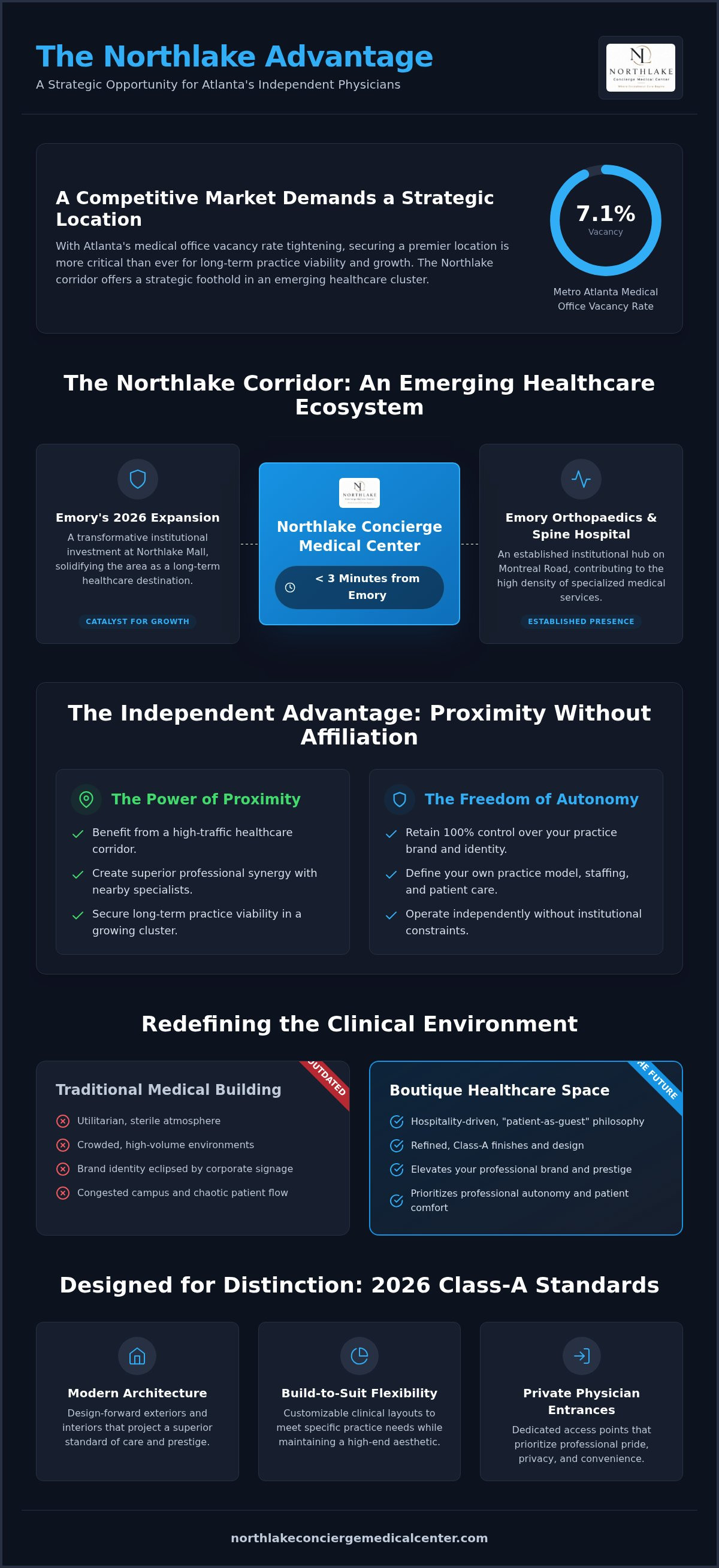
In this analysis, you'll discover how to reclaim your professional identity while positioning your practice at the center of the region's most significant healthcare activity. With the metro medical office vacancy rate tightening to 7.1 percent, finding a strategic foothold is more critical than ever. We'll explore the landscape of the Northlake corridor, anchored by Emory’s transformative 2026 expansion and the density of services on Montreal Road. You'll learn why physical proximity to these hubs, paired with the refined environment of an independent Class-A destination located less than three minutes from Emory's campus, allows for a rare synergy of clinical independence and professional prestige.
Key Takeaways
- Discover how a boutique healthcare space Atlanta provides the ideal intersection of clinical excellence and high-end hospitality to elevate the patient experience.
- Learn why Emory’s 2026 expansion at Northlake Mall is a catalyst for the region, creating a robust healthcare corridor that supports long-term practice viability.
- Understand the strategic advantage of "Proximity Without Affiliation," allowing you to retain full brand autonomy while operating less than three minutes from major institutional hubs.
- Identify the benefits of the Northlake cluster's density, positioned near Emory University Orthopaedics & Spine Hospital on Montreal Road for superior professional synergy.
- Explore the essential 2026 design standards for Class-A medical suites, including build-to-suit flexibility and private physician entrances that prioritize professional pride.
Defining Boutique Healthcare Space: More Than Just an Aesthetic
The medical landscape in Atlanta is undergoing a quiet, elegant transformation. For decades, clinical environments were defined by a utilitarian coldness. White walls, fluorescent lighting, and crowded waiting rooms signaled a volume-first approach. Today, a new standard is emerging. The boutique healthcare space Atlanta physicians are now seeking prioritizes the identity of the practice and the experience of the patient. It's an evolution from the industrial to the artisanal, where the physical environment is as refined as the care provided within it.
This trend is driven by practitioners who refuse to be a mere line item in a hospital system's real estate portfolio. They're looking for environments that mirror the quality of their care. A true boutique space isn't just a retail med spa or a casual wellness clinic. It's a professional medical suite designed for high-level clinical work, but delivered with the grace of a hospitality-inspired destination. These spaces are characterized by lower patient volumes, high-end finishes, and a commitment to personalized service models that allow for deeper patient relationships, often incorporating mobile clinical and documentation support from specialized providers like Dyvine Medical & Wellness.
The Shift Toward Hospitality-Driven Medicine
The "patient-as-guest" philosophy is at the heart of this movement. Every touchpoint is curated to reduce anxiety and build trust. Soft lighting, sound-dampening materials, and intuitive flow replace the chaotic hum and congested traffic of a traditional hospital campus. A boutique healthcare space is a high-end, independent clinical environment designed to elevate professional autonomy and patient comfort. Practitioners are increasingly adopting models like Concierge medicine to facilitate this personalized level of service, making the physical space a critical component of their business strategy.
Class-A Standards in a Boutique Setting
In the 2026 Atlanta market, Class-A standards have moved beyond basic functionality. It's now about establishing prestige and projecting a superior standard of care. Independent physicians are choosing locations like Northlake Concierge Medical Center because they offer modern exterior architecture and design-forward interiors that compete with any major institution. You can view the renderings of these environments to see how flexible build-to-suit planning caters to specific clinical needs while maintaining a high-brow aesthetic.
This shift allows doctors to maintain full control over their brand, staffing, and patient relationships while benefiting from the momentum of the Northlake healthcare corridor. The area is anchored by Emory’s 2026 expansion at Northlake Mall and the established presence of Emory University Orthopaedics & Spine Hospital on Montreal Road. Being located less than three minutes from these hubs provides the strategic advantage of high-traffic medical activity without the constraints of institutional affiliation. It's a choice for the physician who values both proximity and absolute independence in an increasingly corporate medical world.
The Northlake Corridor: Atlanta’s Emerging Boutique Healthcare Cluster
The Northlake region is redefining its identity. While Buckhead and Midtown struggle with prohibitive rents and gridlocked traffic, the Northlake/Tucker corridor has emerged as a premier destination for specialized care. This shift isn't accidental. It's the result of massive institutional investment meeting a demand for more refined, accessible clinical environments. The strategic growth of this region in 2026 offers a rare opportunity for practitioners to secure a boutique healthcare space Atlanta patients can access without the friction of the city's traditional hubs. With a medical office vacancy rate of just 7.1 percent across the metro area, the competition for high-visibility locations is intensifying.
The "Institutional Magnet" effect is in full force here. When major systems invest, the surrounding infrastructure matures. For the independent physician, this maturity translates to long-term viability and a steady stream of patient traffic. However, as the erosion of physician autonomy continues to challenge the industry, the goal is to stay near the action without being absorbed by it. Practitioners are finding that they can capitalize on the area's momentum while maintaining absolute control over their business strategy and practice identity.
The Impact of Emory’s Northlake Expansion
Emory’s 2026 expansion at Northlake Mall has fundamentally strengthened the local healthcare corridor. By transforming a former retail giant into a sophisticated center for primary care and specialized services, Emory has anchored the area's long-term future. This institutional presence provides a layer of confidence for brokers and physicians alike. It signals that Northlake is a growing cluster with sustained economic momentum. A boutique healthcare space Atlanta providers can be proud of is now a reality in this thriving ecosystem.
Strategic Proximity to Montreal Road Facilities
Density creates a specialized ecosystem. The presence of the Emory University Orthopaedics & Spine Hospital on Montreal Road further illustrates this concentration. For specialists, being within a three-minute radius of such facilities is a strategic masterstroke. Northlake Concierge Medical Center occupies this precise sweet spot. It's located less than three minutes from Emory’s expanding campus, allowing doctors to benefit from the corridor's high-traffic volume while retaining full control over their brand and staffing.
Practitioners can design their ideal environment through flexible build-to-suit medical planning, ensuring their physical space reflects their professional prestige. If you're ready to explore how your practice fits into this evolving cluster, you can connect with our leasing team to discuss available suites.
Physician Autonomy: The Core Driver of the Boutique Trend
The allure of the massive hospital campus is fading. For many specialists, the perceived security of being a hospital tenant has been replaced by the reality of brand dilution and bureaucratic friction. This shift in sentiment is the primary force behind the demand for boutique healthcare space Atlanta physicians are now prioritizing. It's a move toward reclaiming the doctor-patient relationship from the administrative layers that often define large medical office buildings. By stepping away from institutional oversight, practitioners gain the freedom to define their own standards of excellence.
Operating as an independent tenant allows for a level of agility that hospital-owned spaces cannot match. This independence is particularly valuable in high-growth corridors where professional reputation is everything. While Emory’s 2026 expansion at Northlake Mall strengthens the local market's viability, the most successful physicians are those who maintain proximity without sacrificing their distinct identity. They seek the advantages of a dense healthcare cluster while ensuring their business strategy remains entirely their own.
Reclaiming the Practice Brand
When a practice is tucked away on the fourth floor of a generic hospital wing, the physician’s brand often becomes secondary to the institution’s logo. Boutique environments change this dynamic. They offer the opportunity to curate a patient journey that begins at the front door. From private entrances to custom-designed reception areas, every detail reinforces the practitioner’s unique philosophy. Choosing Class-A Medical Office Suites in Tucker: Elevating the Boutique Practice provides the physical framework necessary to support a premium brand image that hospital-owned facilities simply lack.
Operational Independence and Business Strategy
Autonomy isn't just about aesthetics; it's a financial and operational imperative. Independent leasing provides a clear path to diverse revenue streams, such as concierge or cash-pay models, without the restrictive covenants common in institutional contracts. These modern Wellness Real Estate Trends highlight a growing preference for specialty clinics that function more like high-end wellness destinations than sterile labs. Retaining full control over staffing and patient relationships ensures that the practice remains a personal endeavor rather than a corporate function. Ultimately, autonomy in real estate leads to better long-term practice management by aligning the physical environment with the physician's specific business goals.
Strategic positioning near the Emory University Orthopaedics & Spine Hospital on Montreal Road ensures you're never isolated from the medical community. You can operate less than three minutes from Emory’s primary care services while keeping your business strategy entirely confidential. It's the ultimate professional balance: high-traffic visibility and total clinical independence.
Designing for the Future: Renderings and Build-to-Suit Trends
Clinical excellence requires a physical vessel that matches its caliber. In 2026, the standard for a boutique healthcare space Atlanta practitioners choose is defined by intentionality. It's no longer enough to simply inhabit a suite; the environment must perform as a strategic asset. This evolution is marked by a move toward design-forward clinical environments that prioritize natural light, intuitive flow, and advanced technical infrastructure. Essential amenities now include private physician entrances for a dignified arrival, medical-grade HVAC systems, and seamless tech integration that supports the modern digital practice.
The psychological impact of these spaces extends beyond the patient experience. In an era where talent is a premium, a refined work environment becomes a powerful tool for staff retention and recruitment. Physicians are discovering that a workspace reflecting professional pride attracts a higher tier of clinical support. By choosing a location near the growing healthcare cluster in Northlake, independent providers can offer their teams the prestige of a high-traffic medical corridor without the congestion of a traditional hospital campus.
The Aesthetic of Trust and Excellence
Design is a silent ambassador for your practice. Utilizing a refined palette of modern materials like glass, steel, and natural stone signals professional reliability and modern luxury. These choices create an atmosphere of calm that reduces patient anxiety and fosters immediate trust. Common areas are no longer mere waiting rooms; they are curated lounges that begin the patient's healing journey long before they see a provider. You can view our design-forward renderings for Northlake Concierge Medical Center to see how these elements converge to create a superior clinical destination.
Customization Through Build-to-Suit
Generic medical office space often fails to meet the precise requirements of specialized clinical workflows. Whether you're designing a high-end med spa, a specialized surgical suite, or a concierge primary care clinic, build-to-suit planning is essential. This process allows for the creation of a bespoke environment that ensures clinical compliance while maintaining a non-institutional feel. It's about achieving a balance between rigorous medical standards and a boutique hospitality aesthetic.
The long-term viability of these custom investments is anchored by the surrounding institutional momentum. Emory’s 2026 expansion at Northlake Mall and the established presence of the Emory University Orthopaedics & Spine Hospital on Montreal Road provide a robust foundation of medical activity. Northlake Concierge Medical Center is located less than three minutes from Emory’s campus, offering the perfect opportunity to build a custom practice in a dense healthcare cluster while remaining entirely independent. If you're ready to elevate your practice brand, you can contact our team to discuss your custom suite requirements and explore available opportunities.
Strategic Real Estate Decisions for Atlanta Physicians in 2026
Real estate is the silent partner in clinical success. For the modern specialist, a location is no longer just a mailing address; it is a strategic asset that dictates the trajectory of the practice. In 2026, the most successful physicians are those who evaluate growth potential through the lens of institutional investment. By identifying areas where major health systems are committing capital, independent practitioners can ride the wave of regional momentum while maintaining their own professional identity. This approach allows for a rare combination of high-traffic visibility and absolute brand control.
The concept of "Proximity Without Affiliation" has become the gold standard for independent medical real estate strategy. It offers the advantages of a dense healthcare cluster without the administrative constraints of a hospital-owned lease. Northlake Concierge Medical Center represents the pinnacle of this boutique trend. It provides a sophisticated, design-forward environment that honors the physician’s autonomy. Positioned near the intersection of I-285 and I-85, it ensures seamless access for a regional patient base that values both expertise and convenience.
Criteria for Choosing Boutique Space
Evaluating a boutique healthcare space Atlanta offers requires a methodical approach to logistics and neighborhood viability. A premier location must be anchored by established institutional markers that guarantee long-term stability. For example, being located less than three minutes from Emory’s expanding Northlake Mall campus provides an immediate infusion of professional confidence. This proximity ensures your practice is part of a growing healthcare cluster that includes the Emory University Orthopaedics & Spine Hospital on Montreal Road. For a deeper dive into these requirements, consult our Medical Practice Management: A Strategic Real Estate Guide for 2026.
The Future of Independent Practice in Metro Atlanta
The Northlake and Tucker healthcare corridor is currently in a phase of rapid maturation. Institutional expansions typically lead to a tightening of available Class-A inventory. For physicians, the window to secure a premier boutique healthcare space Atlanta patients can trust is now. Securing a foothold before these expansions fully mature allows practitioners to establish their brand as a cornerstone of the community. It is a proactive move for those who refuse to be sidelined by corporate consolidation. Northlake Concierge Medical Center stands as the premier destination for this new era of medicine. It offers the prestige of a major medical hub with the soul of an independent practice. The future of medicine is boutique. The future of your practice starts with a strategic location that reflects your standard of care.
Securing Your Professional Legacy in the Northlake Corridor
The transition toward hospitality-inspired environments and clinical independence is no longer a niche preference; it's a strategic necessity for the elite practitioner. As we've explored, the rise of the boutique healthcare space Atlanta is currently witnessing is anchored by institutional momentum and a desire for brand control. By choosing a location less than three minutes from Emory’s 2026 Northlake expansion and the density of services on Montreal Road, you position your practice at the heart of a high-growth healthcare cluster while maintaining absolute autonomy.
As an independent development, Northlake Concierge Medical Center offers a rare synergy of prestige and flexibility. You can define your own patient journey through custom build-to-suit medical suites designed for specialized workflows. This is your opportunity to step away from the congestion of hospital-owned buildings and into a Class-A destination that reflects your professional excellence. Secure your place in Atlanta’s most promising medical corridor and lead the next evolution of independent care.
Explore Boutique Class-A Suites at Northlake Concierge Medical Center
Frequently Asked Questions
What is the difference between boutique medical space and a traditional medical office building (MOB)?
Boutique spaces prioritize a refined, low-volume patient experience over the utilitarian density of traditional medical office buildings. While a standard MOB focuses on functional throughput and sterile environments, a boutique healthcare space Atlanta practitioners prefer offers hospitality-inspired finishes and intimate clinical settings. This shift allows physicians to elevate their practice identity and provide a more personalized level of care that feels exclusive rather than industrial.
Is Northlake Concierge Medical Center affiliated with Emory Healthcare?
Northlake Concierge Medical Center is an entirely independent development and is not affiliated with Emory Healthcare. Its value proposition is centered on strategic proximity rather than institutional partnership. By being located less than three minutes from Emory’s expanding Northlake campus, independent physicians benefit from a high-traffic healthcare corridor while retaining absolute control over their brand, staffing, and practice model.
Why is the Northlake/Tucker area becoming a hub for independent physicians?
The Northlake/Tucker area has emerged as a premier healthcare cluster due to significant institutional investment and established medical density. Anchored by Emory’s 2026 expansion at Northlake Mall and the nearby Emory University Orthopaedics & Spine Hospital on Montreal Road, the region offers long-term viability. Independent physicians are drawn to this corridor to capitalize on the area's momentum without the congestion of traditional hubs like Midtown.
What are the benefits of build-to-suit medical planning for specialists?
Build-to-suit medical planning allows specialists to engineer their clinical environment around their unique workflow requirements. Rather than adapting to a generic layout, practitioners can design suites that optimize patient flow and meet specific technical standards. This customization ensures that the physical space supports the practice's clinical excellence while reinforcing a sophisticated brand image that appeals to high-tier patient demographics and specialty needs.
How does boutique office design impact patient retention?
Design functions as a silent ambassador for clinical quality, significantly influencing patient trust and long-term retention. A boutique healthcare space Atlanta patients find calming reduces the inherent anxiety of medical visits through soft lighting and refined materials. When a clinical environment feels like a high-end hospitality destination, patients are more likely to return and recommend the practice to their own professional and social circles.
Can I customize the interior of a boutique medical suite for a med spa?
Professional medical suites at Northlake Concierge Medical Center are designed with the flexibility to accommodate specialized aesthetic and wellness workflows, including med spas. Build-to-suit options allow for the integration of specific plumbing, lighting, and ventilation needs required for advanced aesthetic treatments. This ensures your facility remains clinically compliant while delivering the modern luxury and peace your clients expect from a premier wellness destination, often featuring programs led by experts from NPTI Florida to provide a complete health optimization experience.
What highway access is available for patients traveling to the Northlake corridor?
The Northlake healthcare corridor offers exceptional regional connectivity via the I-285 and I-85 interchange. This strategic location allows patients from across Metro Atlanta to reach the campus with ease, avoiding the deeper gridlock of the city's central business districts. Seamless highway access is a critical component of a practice's growth strategy, ensuring your regional patient base experiences a stress-free journey to your office.
How does the Emory expansion at Northlake Mall benefit independent practitioners nearby?
Emory’s 2026 expansion at Northlake Mall serves as a powerful institutional anchor that strengthens the entire local medical ecosystem. This investment provides independent practitioners with confidence in the area's long-term viability and drives a consistent flow of patient traffic to the corridor. Operating near a major health system allows you to benefit from a high-density medical cluster while maintaining the absolute autonomy of your independent practice model.


